Woven Works Park: Greensboro’s Hidden Gem on the Downtown Greenway

Last Updated: 2026 | Free to Visit | Open Year-Round
Greensboro has a lot of parks, but few tell a story quite like Woven Works Park. Tucked along the Downtown Greenway at the corner of East Lindsay Street and Murrow Boulevard, this 1.42-acre interactive art park is one of the Gate City’s most creative and underappreciated outdoor spaces — and one most locals have driven past a hundred times without ever stopping to explore.
Woven Works Park at Innovation Cornerstone is the third of four cornerstones on the Downtown Greenway. Each cornerstone features a major piece of public art that celebrates a different pillar of Greensboro’s identity. Here, the theme is Innovation — specifically the textile industry that helped shape Greensboro into the city it is today.
The Story Behind Woven Works Park
To understand Woven Works Park, you first have to understand why Greensboro became a textile powerhouse in the first place.
Textile magnates Moses and Ceasar Cone chose Greensboro for their operations because of the network of rail lines that radiated in six directions from the city’s center. Together the Cone Brothers formed a selling agency to help southern mills compete with their northern counterparts, and in 1890 they incorporated the Cone Export and Commission Company in New York City. Greensboro’s proximity to cotton fields, gins, and warehouses — as well as its location as a central hub on the railroad line — led the brothers to relocate their headquarters to Greensboro in 1893. The innovative and entrepreneurial spirit at the core of their success story continues to play a role in what makes Greensboro unique today.
That legacy is exactly what Minneapolis artist Randy Walker set out to honor when he designed Woven Works Park, which opened in 2016. Walker visited the Historic White Oak Plant at Cone Mills before it closed and used ideas and components from that experience to inform his work. Inspired by the ingenious processes and carefully crafted machinery used in nearby textile mills, he sought to create an artistic composition that acknowledges this ongoing spirit of innovation.
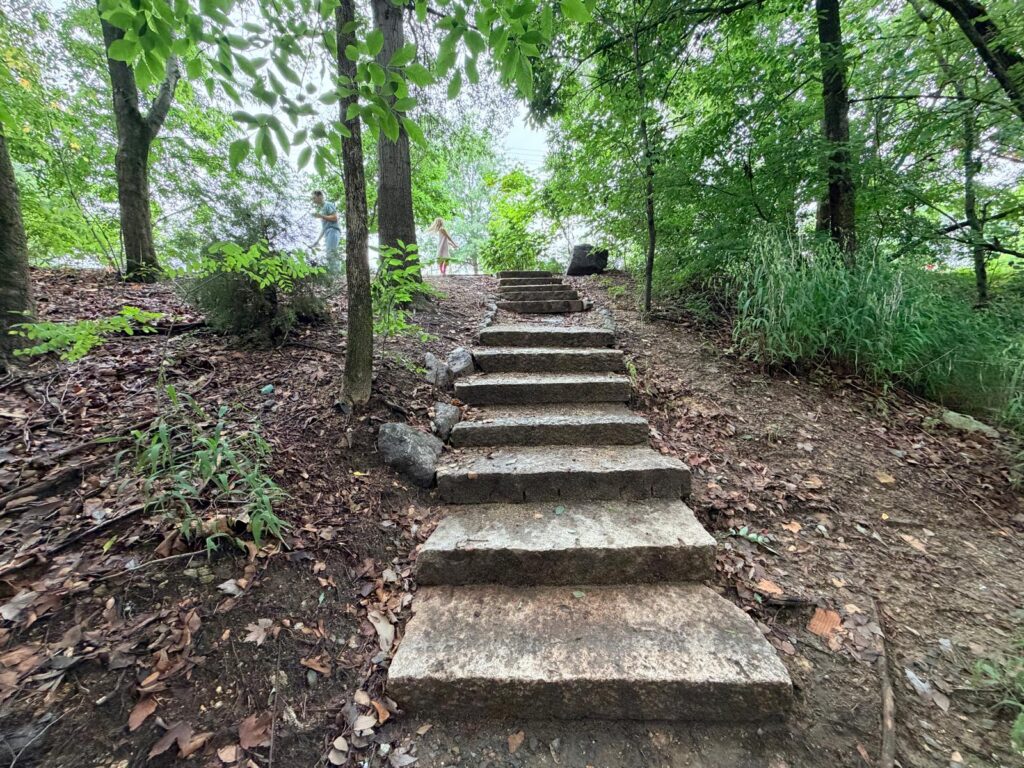
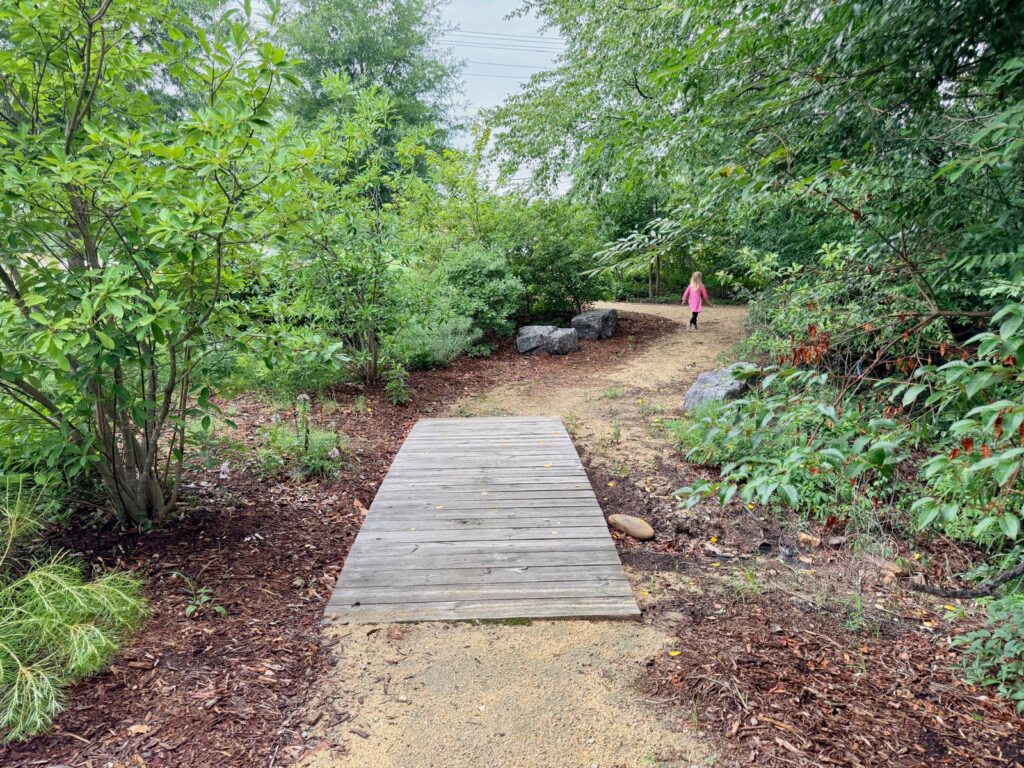
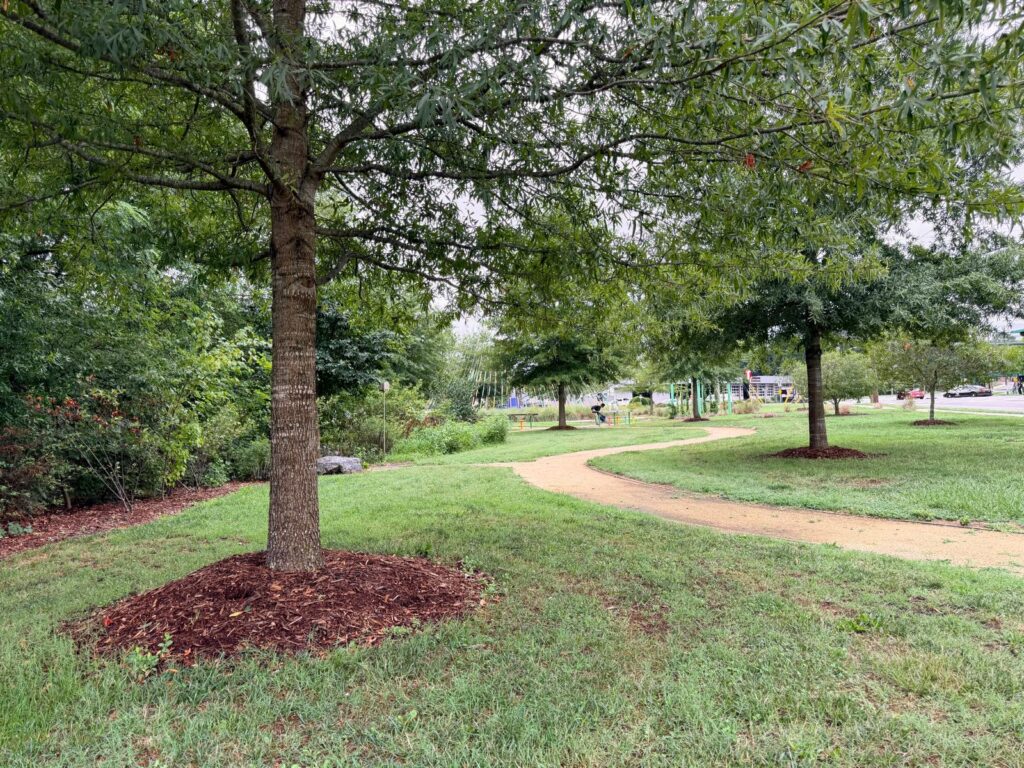
He imagined placing a large-scale twill weave pattern — the same distinctive denim weave so inseparable from Greensboro’s textile heritage — as an overlay on the 1.42-acre park to organize and unite the entire site. Instead of fibers, both paths and landscape beds mimic the crisscross pattern of warp and weft yarns used to create twill. Some of these “yarns” extend to the boundaries of the property, while others disappear, inviting visitors to imagine the pattern extending into the existing landscape. The resulting grid-like pattern creates spaces for activity, growth, and repose.
Within this woven landscape, Walker introduced nine interactive sculptural destinations to be enjoyed as one moves through the park. These sculptures are intended to be playful, open-ended, and accessible structures that can be experienced on a variety of levels.
The 9 Interactive Installations
1. Revolution Cone
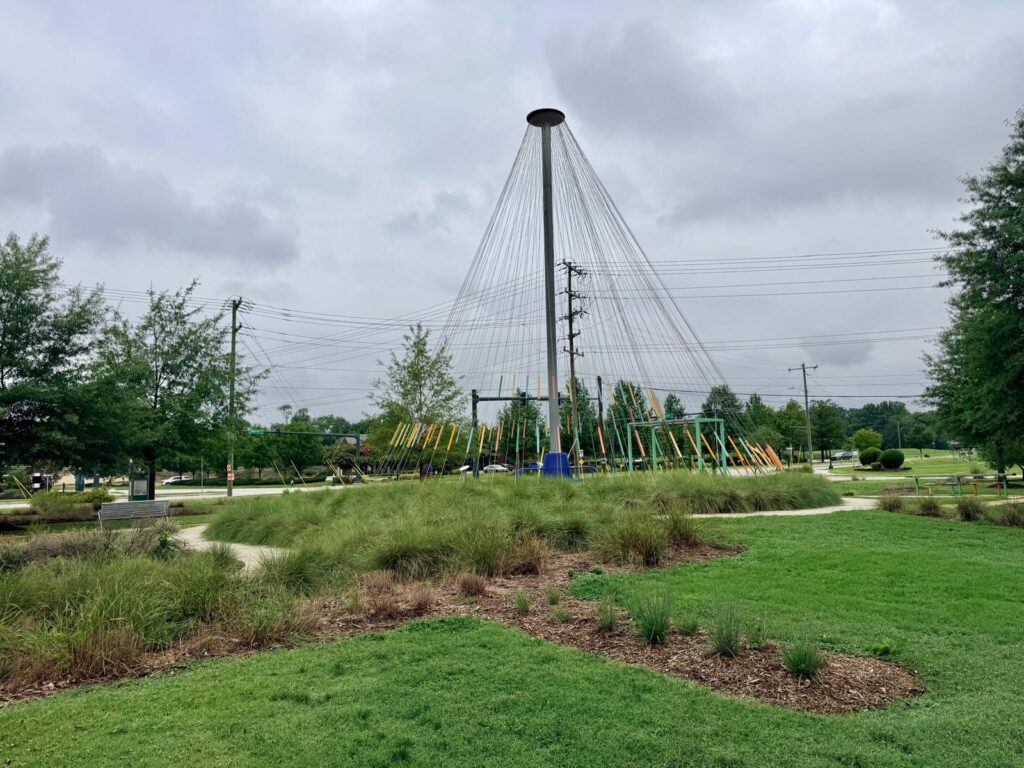
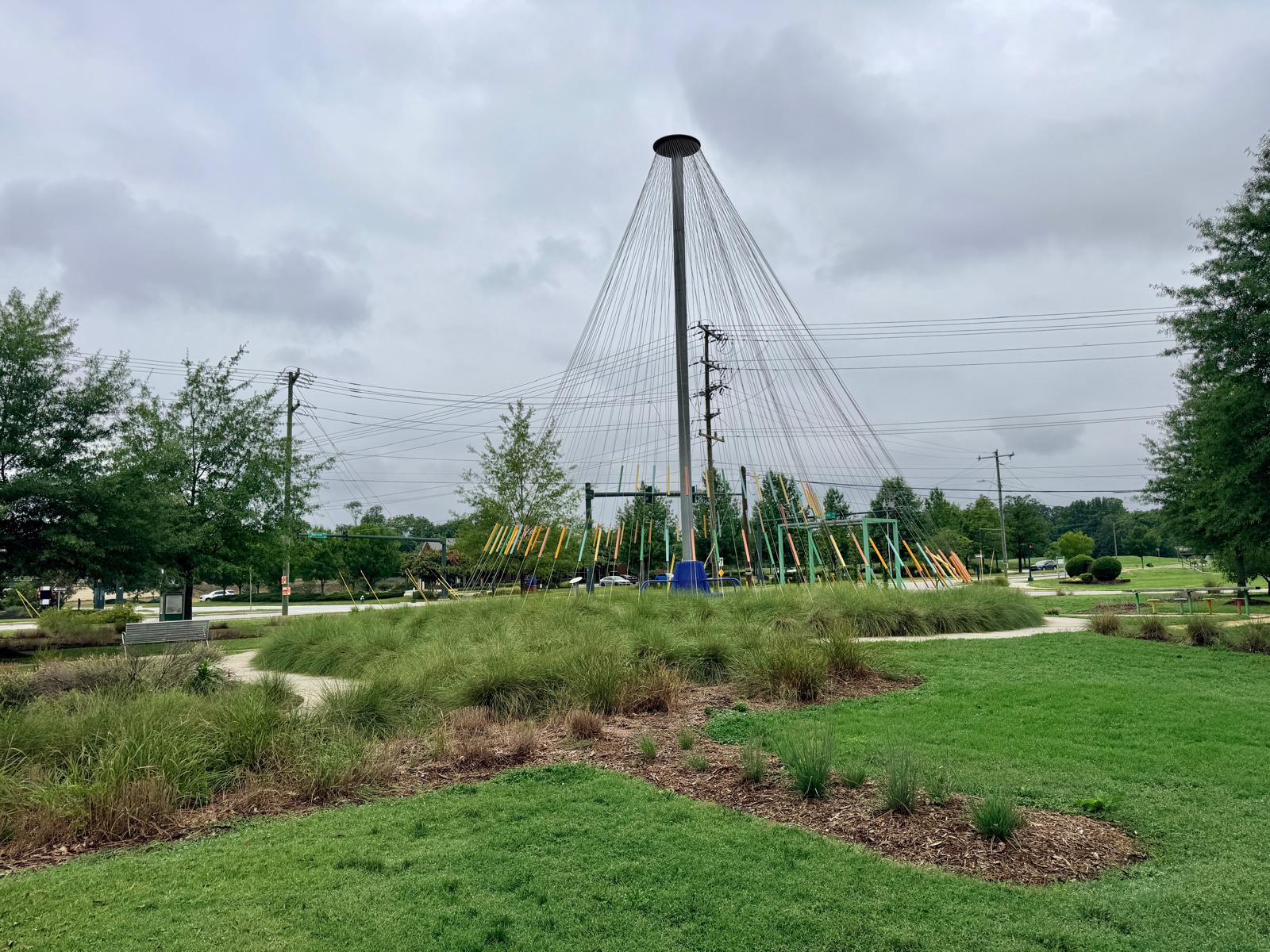
Before weaving fabric, one must have yarn. Like a tall spindle in the process of winding yarns together, Revolution Cone is accessed by following a spiral path as it winds its way through the 101 steel cables that anchor the structure to the site. At the base of the sculpture, a revolving carousel bench offers a continually changing view of the park and the city beyond, where one can also imagine being inside a spool of thread.
It’s the centerpiece of Woven Works Park and the most visually striking element — instantly recognizable and endlessly photogenic. If you only stop for five minutes, stop here.
2. Loom Bike Racks
These bike racks mimic the form of yarn as it passes over rollers and is woven into fabric. The metal yarn appears to support the roller in midair, then disappears into the ground to emerge elsewhere on the site. Secure your bike by weaving your own cable or u-lock through the yarns. Functional public infrastructure turned into art — a perfect example of what makes this park so special.
3. Spool Donor Wall
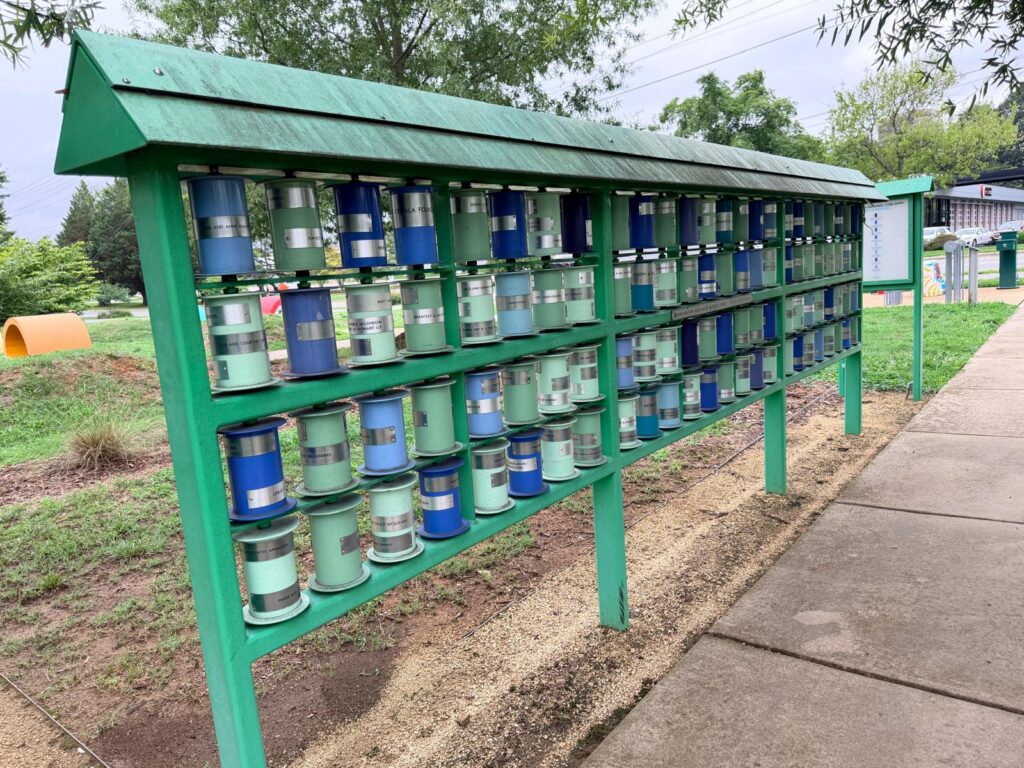
The Spool Donor Wall recognizes the contributions of individuals and organizations to Greensboro’s Downtown Greenway. Inspired by hundreds of slowly turning spools found within nearby White Oak Mill, the sculpture’s color matches the green of the historic Draper looms used in denim production. Visitors are invited to seek out names among the spinning spools — turning donor recognition into an interactive game.
4. Over, Under & Through
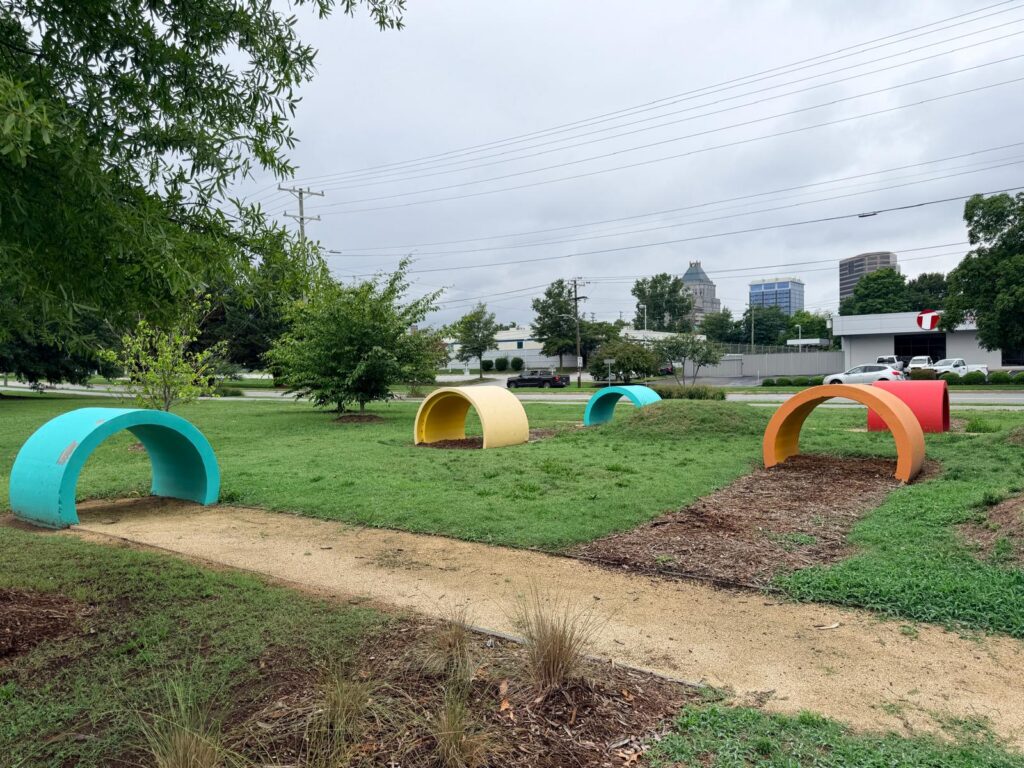
Just as yarn is interlaced at right angles in the process of weaving, six concrete cylinders are arranged at right angles to each other. Placed at the intersections of paths and landscape beds that cross each other, the cylinders reinforce the over/under twill pattern that organizes the site. Kids love crawling and climbing through this one — it’s one of the most hands-on elements in the park.
5. Jungle Jeans
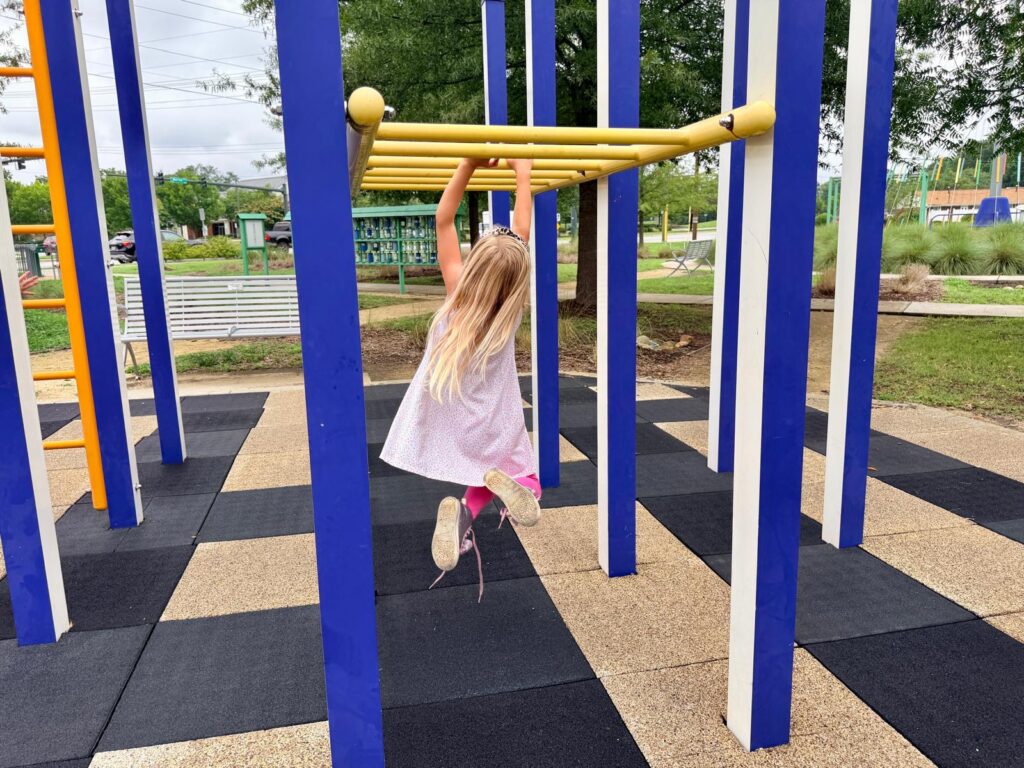
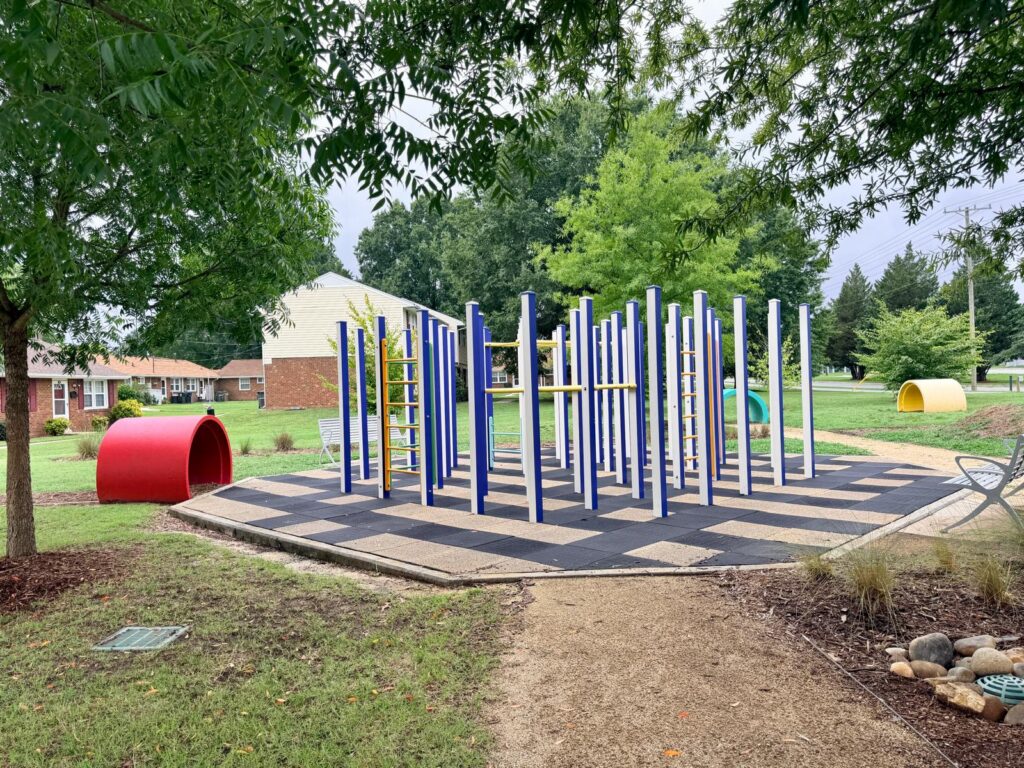
What would it be like to climb around within a denim pattern? Jungle Jeans invites visitors to imagine this idea by playing with the twill pattern of blue denim, which is made from indigo blue-dyed and natural white yarn. In blue jeans, one side of the fabric appears blue and the reverse side appears white. Jungle Jeans extends this idea into three dimensions — a denim-inspired climbing structure that’s both a work of art and a genuine playground challenge for kids and adventurous adults.
6. Selvedge Space
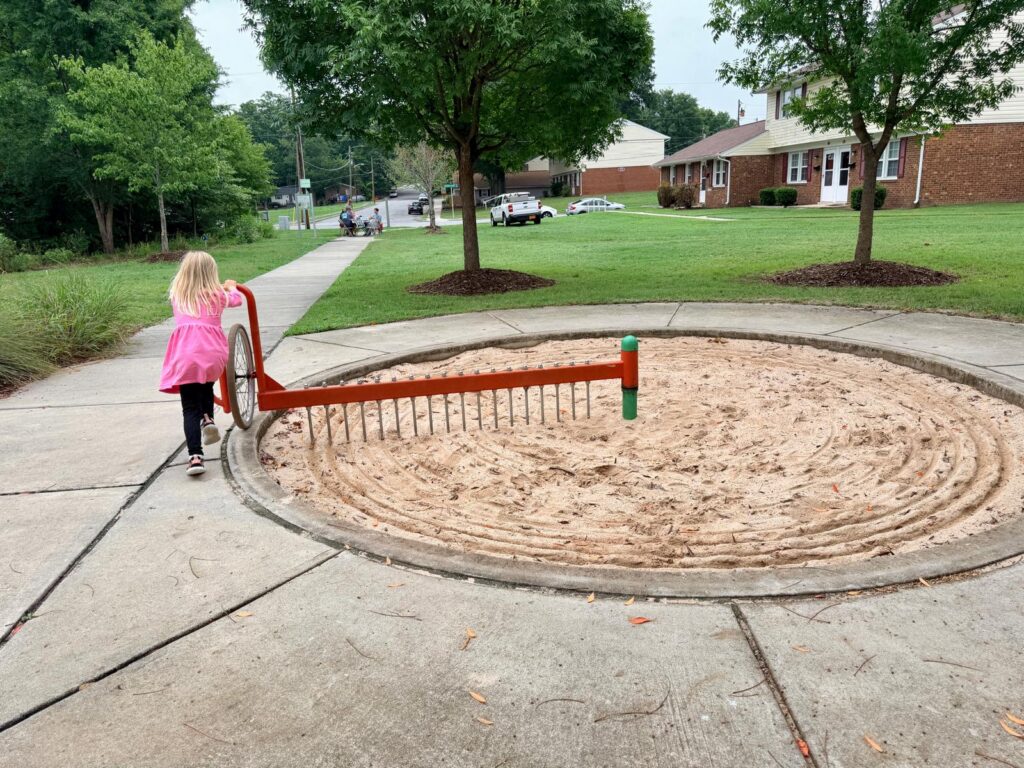
Inspired by the fluid, meditative movement of yarn through looms as fabric is made, this loom-like construction encourages participants to power a rake by rotating its arm through sand. Selvedge refers to the edge of woven fabric during manufacture that prevents it from unraveling. Highly prized denim can be identified by the unique selvedge created by weaving denim on the narrow looms found at White Oak Mill. Here, visitors create their own patterns in the sand — a meditative and completely unique interactive experience.
7. Sit and Spin
Themes relating to weaving and spinning are not limited to textiles — they can also be found in other defining moments in Greensboro’s cultural heritage.
The 1960 Woolworth Sit-In was pivotal to both the civil rights movement and United States history. The nonviolent protest inspired by four Black students — David Richmond, Franklin McCain, Ezell Blair Jr., and Joseph McNeil — who sat down at the store’s lunch counter, were denied service, and refused to leave, was instrumental in establishing desegregation. Sit and Spin evokes the stools and lunch counter at the center of their protest.
Here, the counters and stools are arranged along intersecting paths, accessible to people of all abilities and races, in hopes of generating conversation. It’s one of the most quietly powerful moments in the entire park — easy to miss if you’re moving fast, impossible to forget once you understand it.
8. Hops Garden
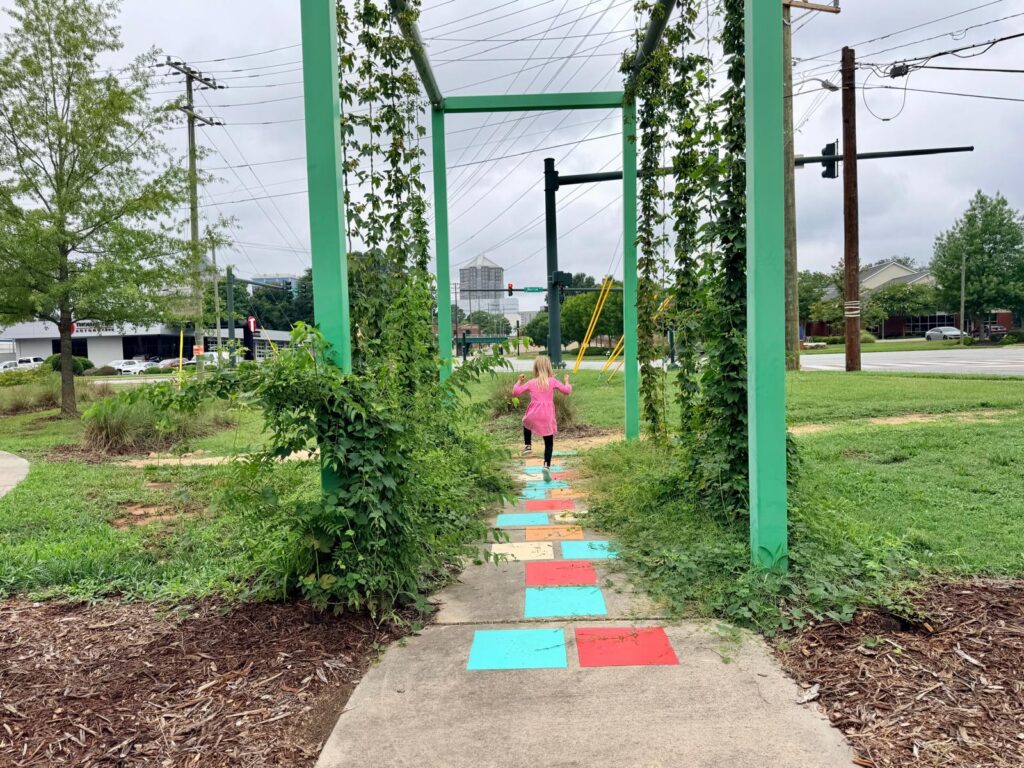
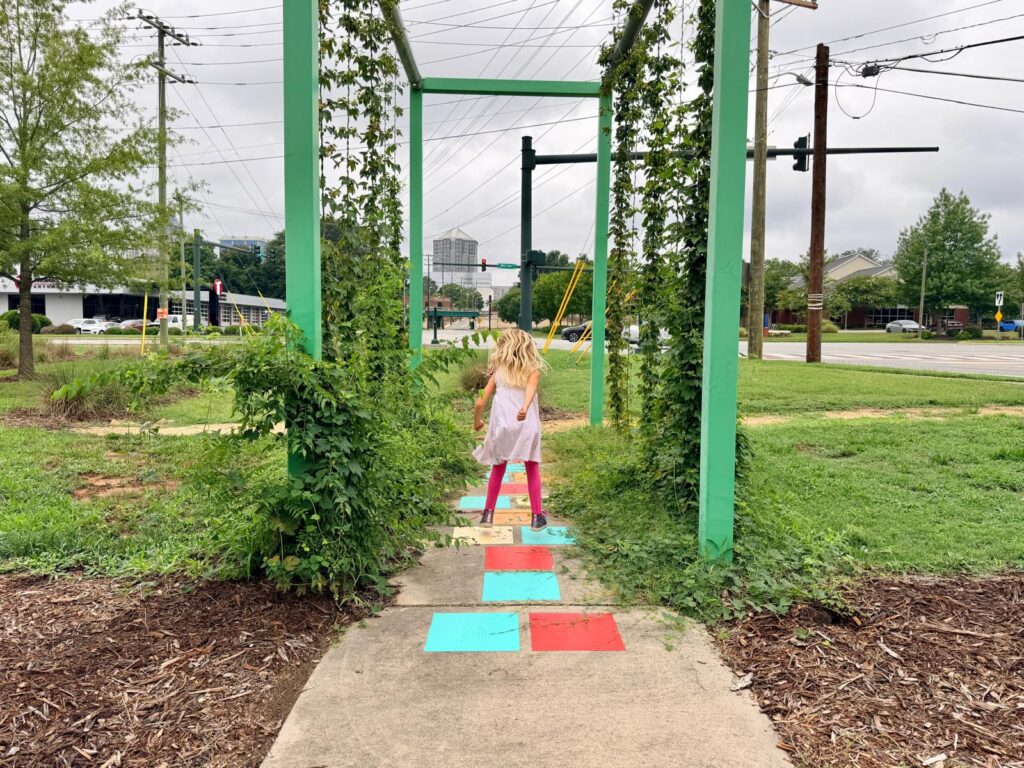
Greensboro’s innovative legacy is ongoing, and local craft breweries are increasingly playing a role in redefining the city. The path of yarn spins and weaves through a textile mill, then winds around spools, over rollers, and through looms. Hop plants used in the brewing process are typically grown on tall, vertical rope trellises, winding and weaving as they mature.
Randy Walker was struck by the similarities of the fiber-like qualities of a hop trellis and the processes found in textile mills. Hops Garden combines these elements into a playful passage to hop, walk, or roll through — connecting Greensboro’s historic textile identity to its vibrant modern craft beer culture in one installation. For a deeper dive into GSO’s brewery scene, check out our Best Breweries in Greensboro & High Point guide.
9. Bird, Bee & Butterfly Pollinator Garden
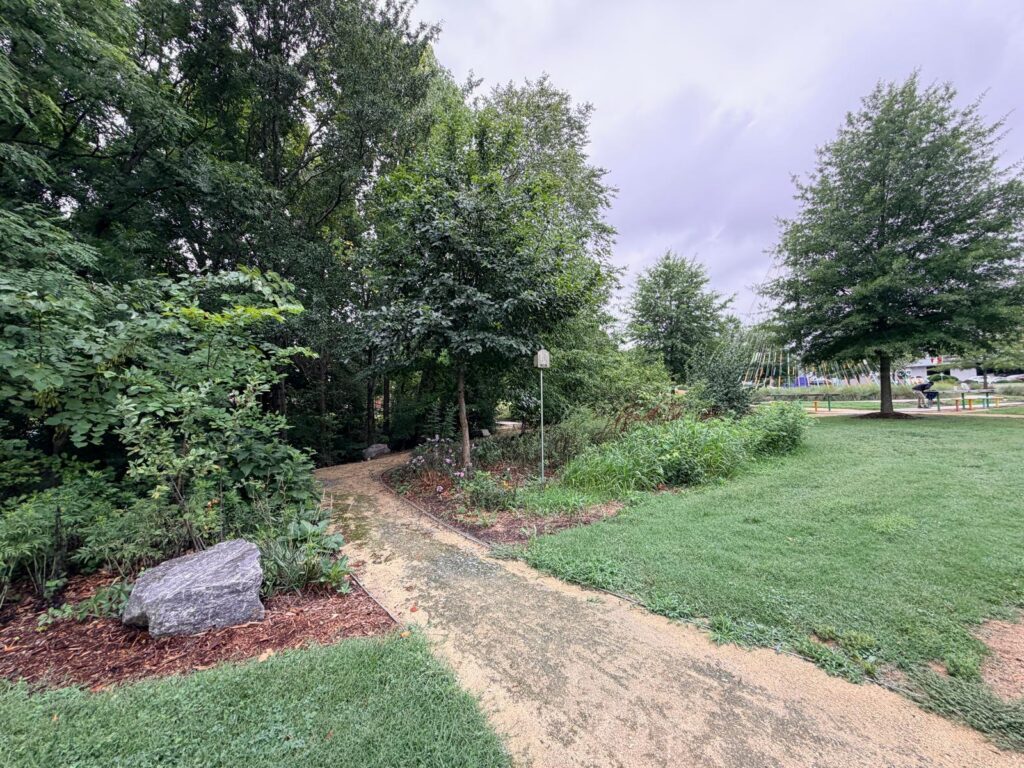
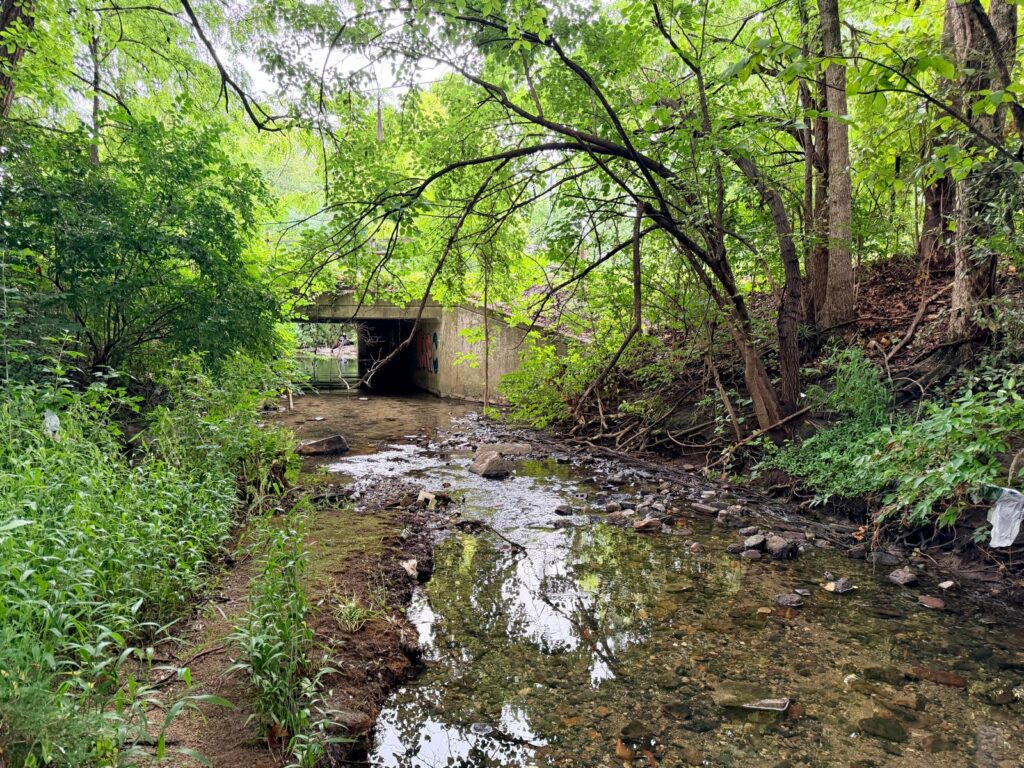
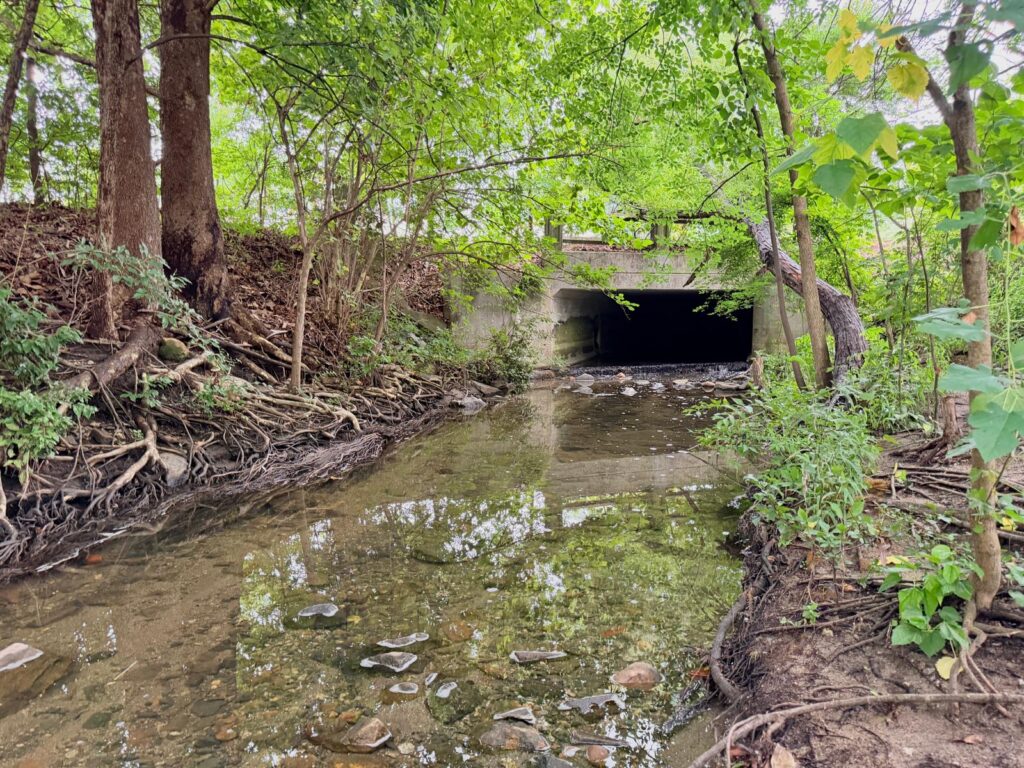
Surrounding the day-lighted stream that runs through the park is a bird, bee, and butterfly garden designed to attract native pollinators. Local advocates including the T. Gilbert Pearson Audubon Society, the Piedmont Bird Club, the Carolina Butterfly Society, and the NC Native Plant Society assisted in the selection of plants to enhance this area. Habitat loss, disease, and contact with pesticides have resulted in significant declines in honeybee and other insect populations — and the Pollinator Garden at Woven Works is a small but meaningful step toward protecting them. It’s especially beautiful in late spring and summer when the native wildflowers are in full bloom.
Dedicated to Henry Samuel Levinson (1948–2010)
The spirit of interactive and accessible play evoked by every installation in this park honors the memory of Henry Samuel Levinson. Henry and Cathy Levinson moved to Greensboro in 1983 and soon became devoted to the city. When Henry lost a 30-year battle with Multiple Sclerosis, Cathy and their daughters Molly and Sarah joined with dozens of friends to celebrate his life.
Henry’s lifelong commitment to play and the outdoors are embodied in this park, and this support is given with the hope that it will bring as much joy and meaning to future generations of children as Henry brought to those who loved and miss him.
Visitor Information
Address: Corner of E. Lindsay St & Murrow Blvd, Greensboro, NC 27401 (401 Cumberland St)
Admission: Free Hours: Open year-round, dawn to dusk
Parking: Free street parking on Lindsay St and Murrow Blvd
Accessibility: Fully accessible — several interactive elements are specifically designed for visitors using mobility devices Dogs: Welcome on leash
Greenway Connection: Located on the Downtown Greenway — easily combined with a walk or bike ride along the full 3-mile loop
More info: downtowngreenway.org | Piedmont Discovery app
Tips for Your Visit
- Go slowly. Each of the 9 installations has its own story and interactive element — this isn’t a park to rush through. Budget at least 30–45 minutes to really explore it.
- Bring the kids. The Jungle Jeans climbing structure, Selvedge Space sand rake, Over Under & Through culvert tunnels, and Revolution Cone carousel bench are genuinely engaging for all ages.
- Make it a Greenway day. Woven Works is the third of four cornerstones on the Downtown Greenway — there’s more public art to discover along the full 3-mile loop. Start here and walk or ride the whole thing.
- Come in the morning. The park is beautifully lit in early morning and far less busy than afternoons on weekends.
- Pause at Sit and Spin. Read the plaques, sit on the stools, and take a moment to think about what happened at the Woolworth lunch counter just a few miles away in downtown Greensboro. It’s quietly one of the most moving spots in any Greensboro park.
- Check the Pollinator Garden in summer. Late spring through early fall is when the native wildflowers and plantings are most vibrant — and when you’re most likely to spot butterflies and bees at work.
- Download the Piedmont Discovery app before you visit for a map and additional information about the park and Greenway.
More Outdoor Guides for Greensboro
- Walking & Running Trails in Greensboro — includes the full Downtown Greenway loop
- LeBauer Park: Your Complete Guide to Downtown GSO’s Favorite Park
- Gateway Gardens: Greensboro’s Free Botanical Garden
- Parks & Playgrounds in Greensboro
- Hiking Trails Near Greensboro
- Free Things to Do in Greensboro
- Kid-Friendly Activities in Greensboro
- International Civil Rights Center & Museum — to learn more about the 1960 Greensboro Sit-Ins
- Best Breweries in Greensboro & High Point — for more on Greensboro’s craft beer scene referenced in the Hops Garden